Showing posts with label new annuals. Show all posts

Monday, January 23, 2017

More Award Winning Plants for 2017

Europe’s top award for new plants is the Fleuroselect Award. These are flowers grown on trial grounds across Europe “…proven to clearly supersede existing varieties in terms of breeding innovation and beauty.”

If a new plant wins both the AAS designation (see previous blog) and the Fleuroselect “quality mark” I will definitely give it a go.  This year one flower falls in that category -  Profusion Red zinnia.  


Profusion Red Zinnia - AAS Photo

(Profusion Cherry zinnia also won both awards in 1999).  The Profusion series (and Zahara series) are shorter zinnias with tons of flowers and they are resistant to powdery mildew.

Others that have won both awards in the recent past include Fresh Look Red celosia  and Tidal Wave Red Velour petunia, both good plants that I grow.  


Fresh Look Celosia

Senator Rose Bicolor  is one of three flowers that won the Fleurosecect award for this year.  Its pink flowers stand out against the bronze foliage and I have always found that the darker foliage stands up the best in full sun.

Senator Rose Bi-color Begonia- Fleuroselect photo


The AAS program has recently added “ornamentals from vegetative cuttings.”  These are plants that can not be grown from seed, only from cuttings of the same plant.  Starting in 2019 there will also be an AAS award for herbaceous perennials.  

While I study new award winning plants carefully, I also browse the reviews of plant performance in the many trial garden sites on the internet.  Most of these plantings are sponsored by a university or a large wholesaler of plants.  If one plant gets top scores from  several northern trial gardens I am probably going to try it.

The trial gardens at Ball Seed in Illinois


Seeds for two of my favorite AAS winners seem to have disappeared - Green Comet broccoli and Bonanza Bolero marigold.  I assume this is because there are only a few vegetable seed companies left in the world and they are eliminating the older varieties in favor of new, “improved” hybrids.  

Like most gardeners, I have my favorite varieties that I grow every year and at the same time  I am also easily tempted to try something new.


Sunday, January 8, 2017

A New Year and New Plants

My brother lives in San Francisco and he doesn't understand Vermonters' penchants towards bright and flashy flowers.   I explain that our growing season is short and we want to pack in as much showy bloom as we can.  Along with craving hot weather and bright days we crave color.  What follows are a few of the new bright blooming flowers I will be offering this year, started from seed.  

One catalogue calls Dianthus Jolt Cherry "...a shocking blaze of super charged color all summer long." I like this new series of dianthus because it is easy to grow, branches out nicely and makes a good "cut." It is a cross between Sweet William and annual dianthus. It is 16 - 20 inches tall and continues to set flowers all summer without setting seeds. And it is very flashy.


Dianthus Jolt Cherry from PanAmerican Seed


The Select Seeds catalogue says of nasturtium Cherrelle "...our new favorite double nasturtium with great flower power, outstanding in early summer and early fall when the summer heat wanes.  "This is a large-flowered new introduction with full-bodied double flowers held well above the unspotted green foliage. It is semi-trailing.


Nasturtium Cherrelle


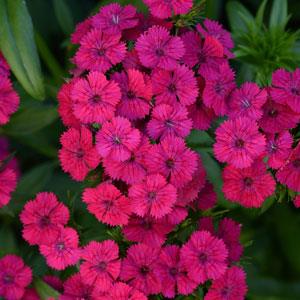
Profusion Red zinnia won both the All American Section (AAS) and Fleuroselect Award for 2017. The Profusion series of zinnias are prolific bloomers of 2" flowers.  They are disease resistant, easy to grow, and continuously bloom  all season.  Judges appreciated the true red color of this zinnia which doesn’t fade in summer.


Red Profusion Zinnia from Sakata 


I like using begonias for hanging baskets,  in particular the newer sun tolerant versions.  Because they do not have a robust root system they don't need as much water as other plants in baskets.  Santa Cruz looks terrific in a hanging pot, but the falling flowers can be messy and are best used as outdoor baskets.


Santa Cruz Begonia

Sunday, March 20, 2016

New Annual Flowers for the 2016 Growing Season - Calibrachoa

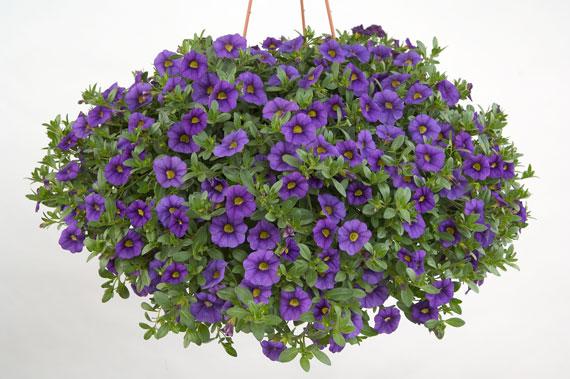
It’s time to rev up my blog again.  I have been planting seeds and rooted cuttings have started to arrive.   One of the most popular of these cuttings is calibrachoa (spell check makes it very hard to write that word). This plant features loads of small bell-like flowers that resemble miniature petunias. The original species is native to South America, but all calibrachoas are now hybrids and there are hundreds to choose from.  

Last year I ran out of calibrachoas (often requested as “million bells” by customers) in the middle of May, so this year I will double production, as well as introduce some new varieties. 


The Callie series are nice for hanging baskets and I have used the Callie Light Blue (above) for two years in front of the Cabot Village Store.    This year I am adding Callie Dark Blue and Callie White

I have had good results with the Noa series of calibrachoas, so I will add from that line  Noa Sunset,  Noa Mega Pink and Noa Cherry Blossom. All three of these scored high in last year's trial gardens.


NOA SUNSET


NOA MEGA PINK


                                                              NOA CHERRY BLOSSOM
       Photos courtesy Danziger Flower Farm

I seem to have selected a lot of new very bright flowers when pondering the orders this winter.   Among them are Aloha Tiki Neon and Minifamous Cherry Red.


ALOHA TIKI NEON


MINIFAMOUS CHERRY RED

While Calibrachoa is closely related to petunias, in 1985 it was determined that this plant had 18 chromosomes, while petunia had 14.   In 1988 wild samples were collected from South America and, after breeding, the first 'Million Bells' was released in 1992.   Their trailing habit make them ideal for hanging baskets, containers or as a small area ground cover.  They are actually a tender perennial, so can also survive low temperatures. 

Monday, March 10, 2014

New Annuals for 2014

I trepidatiously approach this year's growing season.  Some of you know I "lost" my partner, who was also my electrician/mechanic/plumber, to lung cancer June 11 last year.  Every thing I do now pushes the "memory buttons."   In the middle of this endless winter someone crashed into my business sign, so it is also gone.  I imagine local folks who see no greenhouse sign think I am finished as well.

Not so, I hope ... and here are a few of the fun new petunias I am looking forward to trying out this year.  They are all started from cuttings and are not available as seeds.

'Cascadias Indian Summer' is a new variety from Danziger.  The blooms start as yellow and then change to different shades of orange and terracotta. All reports on this new petunia are full of superlatives, particularly regarding its growing habit.


CASCADIAS INDIAN SUMMER
Photo from Greenhouse Product News

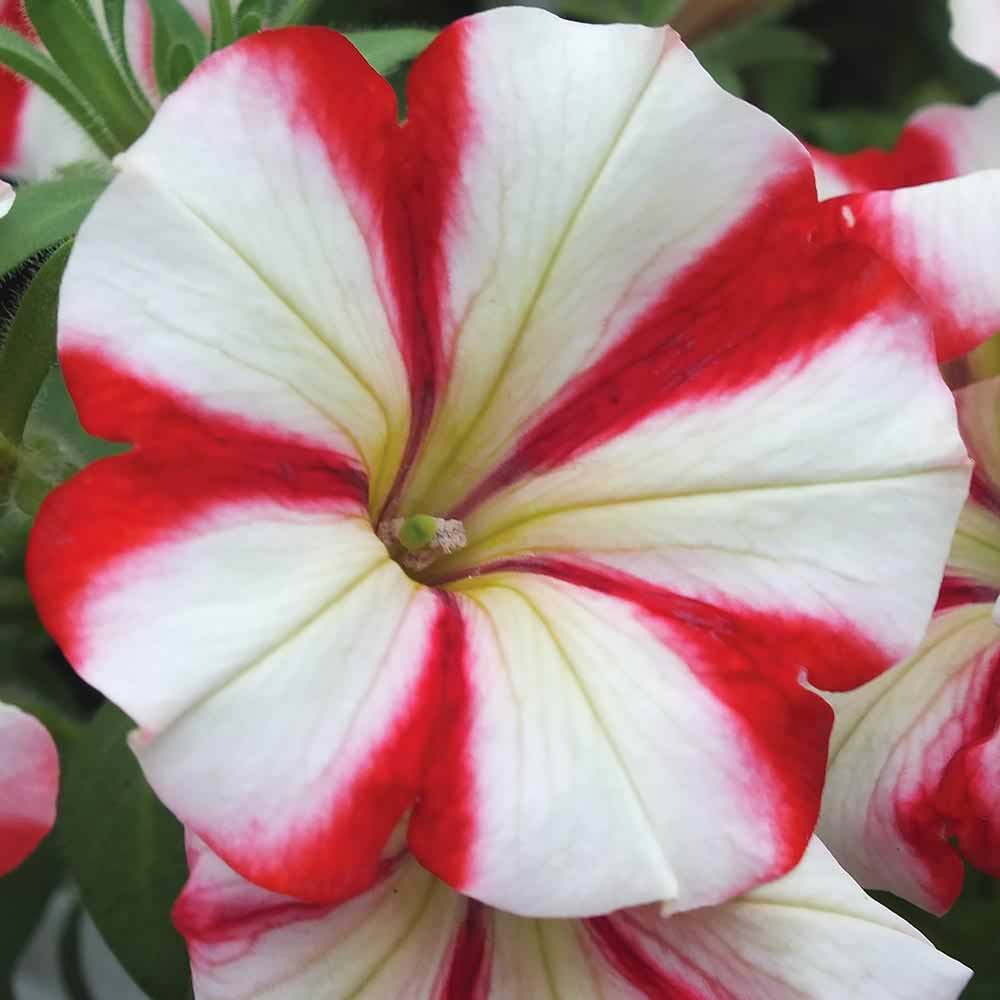
I've tried vaious picottee and striped petunias and they are often not consistent.  I am told that this  'Crazy Cherry Cheesecake' from German breeder Westhoff is "perfect."  Here in Vermont we are so starved for summer that bright colors are always appreciated.


CRAZY CHERRY CHEESECAKE
Photos from Van Meuwen Gardens

A few years ago different companies started introducing black petunias with yellow highlights.  I decided to give another highly recommended petunia in the 'Crazy' series, 'Crazytunia Star Jubilee' a try this year.


CRAZY STAR JUBILEE
Photo from Spring Trials

Black petunias are not my cup of tea.  However, my customers like them and I am growing 'Sweetunia Black Satin' because it is touted as the best black petunia on the market with the color staying true and not as leggy as the competition.


SWEETUNIA BLACK SATIN
Photo from Greenhouse Management Magazine

Wednesday, March 31, 2010

CALIBRACHOA (AKA “Million Bells,” “Super Bells,” “Mini Famous,” etc.)

In recent years many new flowering plants have been developed that are grown from cuttings, not seeds. These plants produce little, if any seed, and must be vegetatively propagated. (All photographs of blooms supplied by the companies selling the plants.)


Calibrachoa, which looks like a small petunia, was first released as ‘Million Bells’ in 1992. It came from wild samples collected in South America in 1988. Wikipedia says that calibrachoas are named after a Mexican botanist, Antonio de la Cal y Bracho, so I learned something composing this blog entry.

Calibrachoa has hundreds of small flowers from spring to fall. “A tiny petunia on steroids” is how I have seen it described, although they are actually an entirely different species. Like most flowers grown from cuttings, you don't have to deadhead calibrachoa.

Dream Kisses Orange Sunset

All the big companies are breeding calibrachoas now. They are great for any container, as they tumble over the side and are loaded with flowers.

My favorite calibrachoas from last year were 'Superbells Plum' and 'Superbells Saffron'. These are both from the Proven Winners series.

Superbells Plum


Superbells Saffron


I like to mix colors in hanging baskets and the combinations sold well last year.


Stay Tuned!

We had five below zero last week, so it’s not exactly planting time in northern Vermont. And yet they are predicting 80 degrees (record highs) for tomorrow.

A new calibrachoa I am trailing this year is 'Mini Famous Double Yellow' developed by Selecta. I have had a few doubles in the past, but they were spotty bloomers. This variety has done well in trial gardens around the country.


Mini Famous Double Yellow


Above is 'Noa Blue Legend,' another new calibrachoa (I wonder what the correct pronunciation is on that word) that I have this year because it rated high in trial gardens across the country last year. I am growing ten different colors this year and I suspect in a month or two I will be posting photos of the results. For now, all is green.

Wednesday, February 24, 2010

New Annuals I’m Trying from Seed (Part I)

I like thunbergia and grow it in hanging baskets. I always assumed it was a shorter vine, but apparently it grows seven feet or more. In the baskets I just pinch it when it heads out. This variety, ‘Blushing Susie’ looked particularly pretty.


BLUSHING SUSIE

I have read that if you grow thunbergia in a pot you can cut it back in the fall, bring it inside, and have blooms over the winter.


We have a “pansy greenhouse” which has one heater and still occasionally goes below freezing. We put our tough plants in there like dianthus and dusty miller and of course, all kinds of pansies. New this year will be the viola ‘Endurio Sky Blue Martien’ which is an All American Selections 2010 "cool season award winner".


ENDURIO SKY BLUE MARTIEN


The Panola series is a cross between a pansy and a viola and is very floriferous. I am adding 'Panola Baby Blue Mix' to our collection.


PANOLA BABY BLUE MIX


One of my earliest blooming pansies is 'Purple Rain' and I will offer it again, along with a new variety, 'Rain Blue and Purple. This series spreads and is taller than others. It can cascade, when used as an edging, making it perfect for window boxes and hanging baskets (if you have the patience to dead head them).


RAIN BLUE AND PURPLE

'Rain Blue and Purple' changes in color from purple and white to purple and blue as each bloom matures. The flower is 1.5 inches, smaller than most pansies, but there are so many of them there’s quite an impact.


I like the ‘profusion’ series of zinnias and this year I am also branching out to try some of the ‘zahara' series. These are not cutting zinnias, rather shorter varieties used for bedding. My problem with zinnias in our cooler growing conditions has always been botrytis and the "profusion" series have been trouble free. 'Zahara promises more of the same, with 20 percent larger flowers.


ZAHARA MIX


ZAHARA YELLOW

Tuesday, October 27, 2009

New Annuals from Seed - Award Winners for 2010

Every year new garden seed varieties are named “All American Selections” because (supposedly/hopefully) they have superior garden performance in impartial trials across north America. I always try to offer all of the new AAS plants to customers.

For 2010 four flowers have been selected as the top new varieties and I will be growing all of them.

Gaillardia ‘Mesa Yellow’ is the first hybrid blanket flower on the market. It is bred for prolific flowering and compact growth with three inch blooms. Gaillardia burgundy overwinters in my gardens, so I have to wonder if this will be a perennial as well. I like the burgundy gaillardia, but it does demand considerable deadheading.


Snapdragon ‘Twinny Peach’ is a double flowered shorter snap (to 12 inches) with a blend of pink tones. The photos make me think of the bloom on stocks. I love the taller snaps for cutting and to me this is more of a novelty plant, albeit very pretty.


Viola ‘Endurio Sky Blue Martien’ (yes, that spelling is correct) was selected “... for its unique spreading/mounding and vigorous garden performance.” It is recommended for edging garden beds, window boxes and hanging baskets.


Zinnia ‘Zahara Starlight Rose’ is the last of the honorees and the one variety I am really excited to try. I have a hard time with zinnias and powdery mildew, and this one supposedly has good resistance. With a 2.5 inch bloom it should be a pretty flower for smaller bouquets as it is 12 - 14 “ high.