Thursday, April 29, 2010

(More) New Plants in the Greenhouse

It's always fun to grow new varieties and see if they live up to the hype. I was excited about mini-famous yellow calibrachoa, as this flower received high points in trial gardens and the photographs were seductive.


The company that developed this flower says: "It has the best plant habit of all the doubles yet, outstanding outdoor performance, and it flowers the earliest." In fact it is adorable right now in the pot.


What I had not anticipated is that the flower is TINY - about the size of a dime.


Another nice new flower is lobularia. I was warned that it was vigorous, kind of a giant alyssum out of control. I have put some in baskets, but I think it's a better plant to put in the ground or use as a novelty flower. The second photo is from the folks who patented lobularia. It's not a great plant for baskets in the greenhouses, as its tiny petals fall on the plants below. (Horticultural dandruff?) Outside it would be fine, but not on someone's porch.


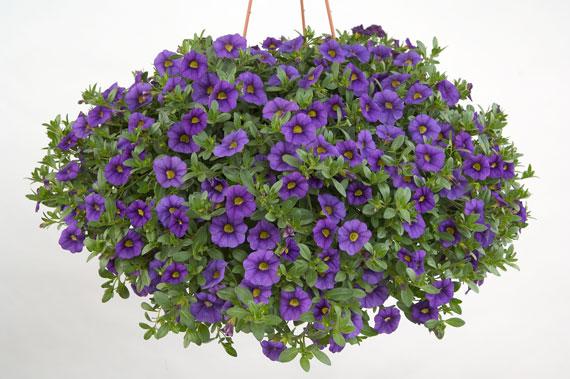
I really like the foliage on this new "sunpatiens" and it seems to branch out more than other new guineas. I ordered in more and the company sent the wrong variety, a solid white. Oh well. I have combined this in a few baskets (sold one yesterday!) with purple calibrachoa. The second photo is from the company that developed this new plant.


We are closed today (Monday) so I will go take photos of yet more new plants for the next entry. We have recovered (physically) from the cave-ins following that snow storm. There's a lot of rebuilding in the future, assuming the season goes well.

Snow Stories - The Bad Side

At first the unexpected snow was quite pretty.


By Thursday morning more than a foot had fallen. The daylilies (and all the plants) were buried and it was still snowing.


The snow was light and fluffy, perfect snowball weather. My dog, Rudy, loved it.


As the morning warmed the snow grew heavier, bringing down tree limbs in my driveway. Neighboring farmers reported they had no electricity.


Having once dealt with a caved-in greenhouse because of heavy snow, I made sure the snow was sliding off my four houses.


But I didn't predict a problem with the outside "shade benches." The roof is made of slats of wood to provide shade while letting some sun in. Snow fell off a tree and crashed through part of one roof on to the tables and plants.


A tree split and crashed on the plants stored out back.


Then the totally unexpected happened. Another shade roof covering hundreds of freshly dug and innocent perennials buckled under the weight of the snow. Its supports gave way, crashing the entire thing on top of the pots, crushing plants and smashing the tables. This was once two long rows of inviting perennials, covered by a picturesque wood slat roof.


Today the sun is shining. We open officially in two days and they are predicting hot and humid weather for the weekend. We will face the destruction, salvage what we can and, as my Dad would have said, "Onward." Nobody was hurt and everything inside the greenhouse still looks great.

Tuesday, April 27, 2010

Perennials and the Weather

It’s 6:30 pm and they are predicting up to 8 inches of snow. Would anyone like to look at some daylilies before they disappear?


We mowed the lawns yesterday. Four days from now they are predicting hot and humid, so I am not going to worry too much about my perennials. This is what we call a “sugar snow.”


Sometimes potted perennials get too much moisture, and I have certainly had my battles with fungal disease. One of my favorite sprays to use later in the season is Pyola, a combination of pyrethrum and canola oil. It hits any pests organically and while the oil attacks insect eggs and larvae, it is also useful for combatting fungal problems.

The bad news is that I have lots more perennials to dig, and I don’t want to do it with a snow shovel.

The good news is that I FINALLY got my catalog finished. It can be downloaded from MY WEB SITE.

And more good news. I have been named one of the top 100 gardening blogs (in the regional section) at this site.

Top Gardening Blogs. Hmmmm - time to start writing again, now that both my catalog and taxes are in the past.

Thursday, April 8, 2010

Photographs of the “Big Greenhouse” April 7

I would like to post something with information for cold climate gardeners at least once a week, but I haven’t started my taxes yet (or even my greenhouse “catalog” ! ! !) so this week’s submission is simply photos taken inside the largest of the four greenhouses.


The above photo is the south side of the greenhouse. On days when it is very cold outside, but the sun is shining, I have to roll up the side to let in cooler air. For this reason right now I do not have plants flush to the side of the greenhouse. The shock of the change of temperature would do them in.


Above I am looking down the center of the greenhouse from the area where I do my transplanting.


The "shady side" of the greenhouse is the home for hanging fuchsias and six-packs of impatiens, hypoestes, etc.


Two of many seedling flats await transplanting.


'Wave' petunias


I always plant a few tomatoes early. The hanging black buckets I got at the dollar store. Danny drilled a hole in their bottoms and I have planted upside-down tomatoes for folks to try.


Here I am half-way through transplanting peppers in four-packs. I plant four different varieties in one pack, so that customers can try different plants without buying six of each.


There is some color in the greenhouse now (the white is lobularia, not alyssum) , but it will be three weeks before any customers can see it. This time of year I am always frazzled and excited at the same time.

Wednesday, March 31, 2010

CALIBRACHOA (AKA “Million Bells,” “Super Bells,” “Mini Famous,” etc.)

In recent years many new flowering plants have been developed that are grown from cuttings, not seeds. These plants produce little, if any seed, and must be vegetatively propagated. (All photographs of blooms supplied by the companies selling the plants.)


Calibrachoa, which looks like a small petunia, was first released as ‘Million Bells’ in 1992. It came from wild samples collected in South America in 1988. Wikipedia says that calibrachoas are named after a Mexican botanist, Antonio de la Cal y Bracho, so I learned something composing this blog entry.

Calibrachoa has hundreds of small flowers from spring to fall. “A tiny petunia on steroids” is how I have seen it described, although they are actually an entirely different species. Like most flowers grown from cuttings, you don't have to deadhead calibrachoa.

Dream Kisses Orange Sunset

All the big companies are breeding calibrachoas now. They are great for any container, as they tumble over the side and are loaded with flowers.

My favorite calibrachoas from last year were 'Superbells Plum' and 'Superbells Saffron'. These are both from the Proven Winners series.

Superbells Plum


Superbells Saffron


I like to mix colors in hanging baskets and the combinations sold well last year.


Stay Tuned!

We had five below zero last week, so it’s not exactly planting time in northern Vermont. And yet they are predicting 80 degrees (record highs) for tomorrow.

A new calibrachoa I am trailing this year is 'Mini Famous Double Yellow' developed by Selecta. I have had a few doubles in the past, but they were spotty bloomers. This variety has done well in trial gardens around the country.


Mini Famous Double Yellow


Above is 'Noa Blue Legend,' another new calibrachoa (I wonder what the correct pronunciation is on that word) that I have this year because it rated high in trial gardens across the country last year. I am growing ten different colors this year and I suspect in a month or two I will be posting photos of the results. For now, all is green.

Wednesday, March 24, 2010

Color in the Garden - Try Coleus


REDHEAD


Here in northern Vermont we have four distinct seasons, maybe five if you throw in mud season. When it’s finally safe to plant (average May 30 where I live) we look forward to as much color as we can pack into our gardens. Discreet waves of color are pretty, but most of us like big splashes to cheer us through our very short summer.

I am turning more and more to coleus to achieve this effect. Most coleus grown from seed needs and prefers shade, while coleus grown from cuttings likes full sun. In fact, at least here in northern Vermont, the more sun, the brighter the color.

What follows are two photos of the same plant I had hanging in the house all winter. One side was facing the sunny window and one side was facing the inside room.


Coleus benefits from moist soils or regular watering and I always pinch off any flowers to encourage foliage growth. Coleus were popular in the Victorian era as a house plant, and today’s souped-up varieties combine brighter and unusual colors with distinct ruffling and textures. An easy way to show off the colors is to plant them in contrasting color groups.

I grow one novelty type coleus called “tilt a whirl.” It kind of twists as it grows and customers like it.


TILT-A-WHIRL


Fishnet looks sweet right now, and should shape up to a really neat plant.


FISHNET


Florida city yalaha has a bright center.


FLORIDA CITY YALAHA


Coleus are easy to grow and if grown in a pot, they are fine inside all winter. I cut them way back before bringing them inside and continue to trim them back during the winter as well. In the spring I have a huge plant with lots of room for cuttings to pass on the color.


HENNA


REDHEAD


Thursday, March 18, 2010

The Snow is Melting ...

... And I am in my usual spring frenzy of planting seeds, transplanting seedlings and getting ready to uncover and dig perennials. I was wondering how people find the time to write in their blogs and thought it would be fun to take some “before” photos, with every intention of having fabulous “after” photos to show later in the spring.

The “big greenhouse” has a peeked roof and the two layers of plastic stay on it year-round. In the fall we roll up the plastic on our three larger hoop houses, as it gives the plastic a longer life and saves potential cave-ins from snow, which I did have one year.


Above and below is the “pansy house” right now.


And the pansies have been started in the big house..


Below is the "tomato house" as it looks right now.


Stay tuned!


The benches outside are empty and will slowly be filled as it warms up.


We haven’t put the glass (recycled doors) on the cold frame (above) along the big house because if we have a late snow it would break the doors. We are filling up the big house and even have some blooming thunbergia.


The red-winged blackbirds have arrived. The children next door are playing on the swing and I have even seen some motorcycles go by. They are predicting 60 degrees today and then back into freezing temps. Onward.

Friday, March 5, 2010

Great Flowers - Poor Sellers

Sometimes I am the only customer for some of the flowers I grow. There are a number of reasons for this. Many gardeners are not familiar with these plants and I don’t have photo tags for them. Seed catalogs push new varieties and they also carry the most popular, familiar varieties.

I always plan on advertising the underused flowers better with photos and information .... and I don’t find the time.

One of my favorites flowers is lavatera trimestris or "rose mallow". It is related to hibiscus and hollyhock and can bloom up to five feet, but the common ‘silver cup’ is typically about 3 - 4 feet. Lavateras do best in areas with cool summers, so here in central/northern Vermont they usually do well.


LAVATERA


The most common cultivar is a pale pink. I like 'tanagra' as well, which is rosier, and there is a shorter white version.


'Tanagra' LAVATERA


'Twins White' LAVATERA


Not only is this a showy bloomer most of the summer, it’s also great in bouquets. At farmers’ markets, my bouquets with lavatera sell first.


Summer visitors are always surprised by my tithonia. It’s a bright orange flower and a real stand-out. I have seen it listed as a good cut flower, but I find it better for display, as the stem is hollow and it hasn’t held up well for me in bouquets.


'Torch' TITHONIA


'Twinkle' phlox is an adorable short (8”) grower, good for sunny borders front of borders. It comes in a mix of bright colors.


Twinkle Phlox


I also like tri-colored amaranthus. It's a head turner and is actually an edible herb, although I haven't tried it in that capacity.


AMARANTHUS tri-colored


Verbena bonariensis is a perennial south of us, but here it is a well-loved annual. It blooms from mid-summer until frost and butterflies love it. It is tall (4 - 5 feet), but needs no staking. Its lavender ball-like blooms are somewhat similar to allium, but there are tons of them on slim branches, giving it an airy, swaying appearance. It is one of those delicate looking plants that's actually tough. I have a few customers who buy these by the tray for landscaping, but very rarely do I sell a single six pack.


Verbenea Bonariensis


All of these plants do best in full sun here.