Thursday, July 23, 2009

Daylilies Blooming in my Gardens Today

The dayliles are finally beginning to open. Here are some photos I took this morning in the "road garden." The first is 'Barbara Mitchell', a pretty pink 6" bloom that has been around since 1985 and was the top vote receiver in the American Horticultural Society popularity polls.


BARBARA MITCHELL


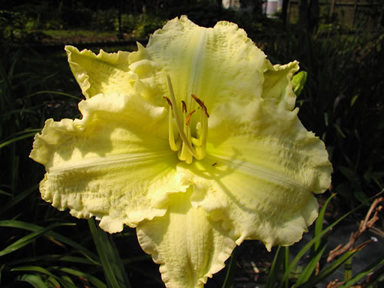
Next is a true white daylily, 'Gentle Shepherd.' I think this may be the whitest daylily available. 'Ice Carnival' and 'White Formal' both have an underlying yellow tint. 'Gentle Shepherd' can be variable with its flower form, but it remains my favorite white (until you ask me next time.)


GENTLE SHEPHERD


'Sunday Gloves' is another nice white daylily, although not quite as pure as 'Gentle Shepherd' it probably has a more consistent form.

SUNDAY GLOVES


'Holiday Delight' makes a bright and bold statement in the garden.

HOLIDAY DELIGHT


And I will end with 'South Seas' which has an unusual bright coral/tangerine coloration.


SOUTH SEAS

Wednesday, July 22, 2009

A Very Wet Summer in Vermont So Far

I far prefer too much rain over a drought any time, but this is getting a bit extreme. The slugs and ear wigs are really happy. I laughed when someone told me about slugs coming into their house on their dog, but then I discovered slugs coming up my front steps on their own.

One side effect of the constant wet and overcast weather, combined with a cool spring, is that the daylilies are late to bloom and the mums seem to think fall is here, so they are setting buds prematurely.

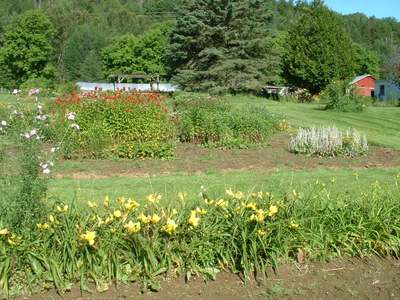
Here are some of my daylilies for sale.


Well, the foliage is nice and green! I actually do have some in bloom and they are coming along. This is a customer making her choice.


I was pleased to see Erngium ‘Blue Hobbit’ (sea holly) all over wintered without a problem, although I’m not quite sure how to use this flower yet. The descriptions says 8 - 10 inches tall, and mine are at least 20 inches tall, but that could be all the rain.


And I will end today's entry with three bouquets I made for farmers’ market.


Sunday, July 19, 2009

Hardy Vermont Perennials and My Story

As I get “into” blogging I realize I have said very little about myself. I am a single woman, no doubt considered elderly by many (will be 63-years-old shortly). My parents always loved gardening. It was more of a chore for me as a child, but as I got older I had to have a garden. It got a bit extreme when I married a local farmer and we ended up with 90 acres of small fruits and vegetables.

The farm thrived, the marriage didn’t, and 20 years ago I started “Amanda’s Greenhouse.” I now have four greenhouses and at least half an acre of perennial plantings which we dig and pot up in the early spring for sales. I pride myself on growing the perennials here (zone 4 at best) and only selling plants that I know will overwinter in the colder northeast.

About half my income is from perennial sales and the rest is from bedding plants and cut flowers.

My friends are wonderful and I love living in a small Vermont community. My other passion, besides horticulture, is vintage fashion. I also have four cats and a dog and I am a lousy housekeeper.

And now - to the gardens. Here are three quick and dirty photos I took by the house this morning before I opened for business. I have more gardens further from the house.


I was delighted to see this pretty new daylily, ‘Beautiful Edging’ which I will have enough of to offer next year.


I do have quite a few of the pretty Dublin Elaine to offer at the sale this year.


We have actually had a day without rain and we are closed tomorrow. My "To Do" list is already almost one page long.

Saturday, July 18, 2009

LET THE DAYLILIES BEGIN

I am having a HUGE daylily sale. Every single variety is on sale for $6.00 and if visitors buy ten or more, the plants are $5.00 each. These are all top notch plants with many fans and I have well over 200 varieties from which to choose. Now if we could just have more sun to get them to show their colors. Here are a few samples of what I am offering.

Brocaded Gown is a nice light lemon yellow with lots of ruffling on the petals. It has won the Stout Silver Award, which is the highest award a daylily can receive and only one variety is chosen for this honor each year. This one has is 6 inch blooms.


Chicago Weathermaster is a pretty dark lavender daylily with 6” blooms.


‘Flycatcher’ is what is called a ‘spider’ daylily. It has long narrow flower petals and to officially be labeled a “spider” the petal length to width ratio must be 4 to 1 or greater. This particular flower is 7.5 inches across and a nice strong red with a large yellow to green eye.


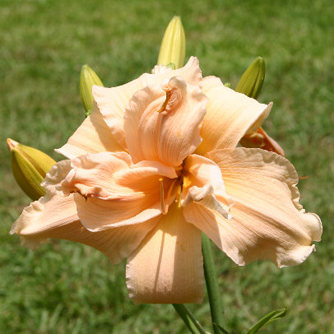
I like the name of this last one - ‘Scatterbrain’ (so apropos) and it is a lovely flower. It is a light peach pink semi double, 6 inches across.


All the daylilies I sell are grown here and are offered in one gallon containers.

Thursday, July 16, 2009

Pleasing Perennials Blooming Now

While my all-time favorite perennial shasta Daisy is ‘Becky’ (great for flower arrangements), I like this shorter version, ‘Snow Cap.’


Heliopsis (“false sunflower”) blooms for a long time in my gardens and it’s another good plant for cuts. ‘Lorraine Sunshine’ is a relatively new introduction to the perennial industry. It holds its variegation, and as one customer said, “It makes me smile.”


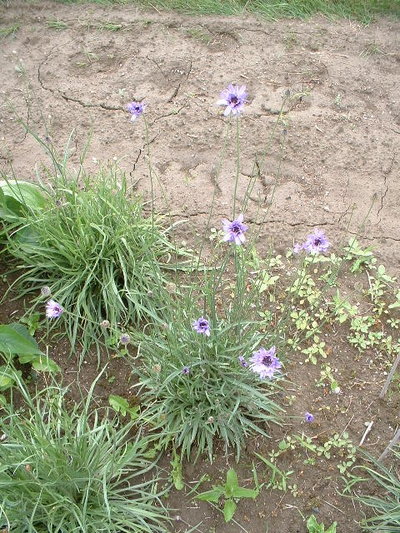
Catananche, or “cupid’s dart” isn’t particularly showy, but it is an excellent cut flower and because it’s pretty darned close to true blue, it goes with anything in a bouquet.

Monday, July 13, 2009

Vermont Farmers' Markets ... and me

In my youth (sigh) I was quite good at keeping a daily diary. Somehow I must reinvigorate that energy for this abandoned blog. So I will start the easy way - posting photos with commentary.

Here are early pictures of my setup at the St. Johnsbury Farmers’ market. All of the baskets have long gone to new homes. I placed annuals on the right and perennials on the left and herbs, etc. on the table under the tent.


Here is a shot of the same area last Saturday (July 11). I bring a lot more perennials, no more baskets, and I have started making bouquets.


I have been involved with farmers’ markets for years and love the opportunity for customers to buy from folks who are actually growing the vegetables and plants. Both the St. Johnsbury Farmers’ market and the Danville farmers’ market fall under the “Caledonia Farmers’ Market” umbrella.

I was instrumental in starting the Waitsfield farmers’ market and the Waterbury farmers’ market, both of which I attended for years. I also participated as a vendor at the Montpelier market, but eventually left, as they wouldn’t let me bring perennials.

The Danville market is held Wednesday's from 9 - 1 on the green in town, just off Route 2. Because it is on grass with picnic tables and trees it has a real charm and the vendors are terrific. Many of those same vendors attend the Saturday market (also 9 - 1) at St. Johnsbury. That market is larger and a bit more sprawling and is also a great opportunity to get the freshest produce.

I enjoy both markets, but Danville is my favorite.

Monday, September 1, 2008

DAYLILIES in Vermont


Today is Labor Day and with a few exceptions, the daylilies have pretty much "had the radish." I field grow @ 150 cultivars and a few weeks ago took some photos that I will share here. Most gardeners now realize that daylilies come in all colors except for blue (and heaven knows, the breeders are hard at work) and all sizes from one inch across and ten inches high to ten inches across and 4-5 feet high. Above are some doubles I picked the one day I was tilling the "upper field."


The same day I picked these others as well.


We are heading into the MUM season big time now and I will post about them soon.

Sunday, July 27, 2008

Late Summer Color in the Garden

Gardeners head for the nurseries and greenhouses in the spring and are often seduced by whatever perennials are blooming in the pots at that time. The result is a colorful spring and early-summer garden, but by late summer and fall the gardeners are wondering .... where have all the flowers gone? This entry will cover some reliable plants for late season color.


Of course you can always buy some mums for a shot of fall color and sometimes they do “come back,” but the only reliable perennial mum I have encountered is ‘Clara Curtiss,’ (above.) It has a light pink daisy-shaped flower with a yellow eye and grows around 18 inches high. This plant is a vigorous spreader and will benefit from a shearing around July 4, resulting in nice full blooms in the end of summer.


Although I think of echinacea (cone flower) as a fall plant, mine bloomed in July this year. Helenium (sneezeweed) is a late blooming perennial with small flowers in oranges and reds that look similar to cone flowers. The unfortunate common name “sneezeweed” comes from the fact that this flower was dried and used as snuff by natives and early settlers.


Eupatorium (“Joe Pye Weed”) is a native plant that grows tall with large heads of rosy pink flowers, a butterfly favorite. The newer eupatoriums have been bred to be shorter, but the cultivars I have tried are still quite tall.

Sedum is a genus of about 400 species of leaf succulents and “Autumn Joy” is the one cultivar that seems synonymous with fall gardens in Vermont. Butterflies and bees love these plants and they look nice paired with another fall blooming perennial, ‘Purple Dome’ aster.


Chelone (“turtlehead”) has dense spikes of rose-pink flowers in the early fall. The deep green foliage looks nice all season and it does well in moist soil.

Cimicifugia produces long white flowers on tall (3 or more feet) stems which grow up from a finely cut fern like foliage. I steer clear of the species and go with ramosa atropurupurea or one of the dark-leaved hybrids because they do not spread. This plant, which is also called “snake root and bug bane,” provides a nice vertical accent in the garden and does well in light shade.

My monkshood is blooming now, but the cultivar ‘Arendsii’ is a real late bloomer, in fact I have lost it to frost some years. This particular monkshood is around three to four feet of height, the shortest & stoutest of all monkshoods.

Next spring when shopping for perennials, consider some of these plants for your late summer garden. Actually perennials in pots are fine to plant anytime during the summer as long as they are well watered.

Saturday, July 19, 2008

Wedding Flowers


Every time I commit to providing flowers for a wedding I come to regret it. In this case it was the daughter of a friend and they were “totally open” to whatever I came up with. “Just use what ever is blooming in your gardens,” I was told.


I like combining foliage and flowers for unusual, but attractive bouquets, so I thought it would be fun. I said I would do the bride’s bouquet and her maid of honor’s piece as well. I never do the corsages or boutonnieres as I’m not very good with the wiring of flowers, ribbons, etc.


A few weeks before the wedding I get a call saying the bride wants burgundy flowers in the bouquets. OK - this is not good. I do have burgundy flowers in the fall, but not in early summer. Then she visits with table cloth samples and the ten bouquets are going on a table cloth the color of ... dark tan. Kind of a difficult color to work with, even though it sounds easy.


She liked some baskets I had on hand, so we decided to go with them - putting in liners and using Oasis. Then I get the call - she wants the bouquets to look “elegant.” Again I am flummoxed. The baskets are already countrifying the look and I imagine she’s thinking calla lily type elegance ($35 a small bunch wholesale). She also has a new favorite color - gold-orange.


At this point I am sweating bullets. I ended up spending $86 at the florists buying spray roses in her favorite color, some alstromeria for blending and various filler flowers.

So, I have been showing photographs of the end results. This last photograph is the bouquet for the bride and her sister. I ended up kind of doing my thing. There’s even some castor bean in one of the bouquets. As I write this they are all sitting down for the meal and hopefully admiring the flowers.


Monday, June 30, 2008

Bouquets from Your Garden


I enjoy making bouquets for myself and occasionally am asked to supply arrangements for weddings and large events. Because I have perennials growing in the fields, there’s usually something to choose from, and this article will talk about how to make a long lasting bouquet and my favorite flowers for that purpose.

The best time to cut flowers is in the cool of the morning or in the evening. Morning flowers are turgid and less likely to wilt. For a big job I typically cut flowers in the morning, let them “rest” with preservatives in a cool place during the day, and make the arrangements that evening.

The rule of thumb is to cut newly opened flowers without pollen showing. Once the flower is pollinated it immediately begins the process of fading and forming seed.

Using clean scissors, it’s best to put the stems in warm water which greatly increases water uptake. In the field I cut long stems and strip off the bottom leaves to help prevent decay. Once the bouquet is made I cut the stems one more time.

Floral preservatives definitely prolong the life of a bouquet. They supply food and acidifier. Plants take up acidified water (ph 3.5 - 4.5 ) much faster than nonacid water. If you want to make your own preservative, add 1 teaspoon vinegar, 1 tablespoon sugar and one crushed aspirin tablet to 24 ounces of water. The aspirin helps prevent bacteria and you won’t get that nasty smelling water. Another recipe I have seen is to combine 1 cup regular 7-Up, 1 cup water and 1/2 teaspoon household bleach.

Besides appearance, the most important component of a bouquet is that it be long lasting. Generally flowers that dry well also last a long time in bouquets. Yarrow, gomphrena, astrantia and larkspur would be examples.

As I write these words my Siberian iris are blooming away. I cut them in a bud stage, just as they are starting to open. By the time they are delivered most will be blooming. The buds are pretty as well but this flower is not particularly long lasting . Iris and peonies generally bloom at about the same time and are a nice combination.

One of my favorite “cuts” (below, left) is lysimachia clethroides (gooseneck). It can be an invasive beast and I grow it as a row crop, tilling on each side, but it compliments any bouquet and easily lasts at least a week.


‘Becky’ shasta daisy, which won the perennial plant of the year in 2003, (below, right) is also terrific for cutting. Unlike many other shastas, it stays upright and has a long bloom time and is also long lasting in bouquets.


Another excellent perennial for long bloom and good cuts is ‘Summer Sun’ heliopsis. Monkshood provides blue spikes, which compliment any bouquet. Bee balm comes in shades of red and pink. Astilbe is lovely, but after 4-5 days it wilts for me. I’m not crazy about liatris as a flower, but it certainly is long lasting in bouquets.

I like to use foliage in my bouquets and often use the silver stems of Valerie Finnis artemesia and branches from the burgundy-leaved ninebark.

One of the best cuts in the fall is golden rod. People think this flower is a main cause of seasonal allergies. Golden rod is NOT responsible. The pollen is heavy and sticky, designed for insect pollination, not wind. Its peak blooming period coincides with the peak of ragweed season, which is wind pollinated. The only way to get goldenrod pollen in your nasal passages is to stick the flower up your nose! Wind-blown ragweed pollen is the most common culprit for allergies.

Of course there are all kinds of great annuals for cutting, among them zinnias, asters, snap dragons and the later blooming salvia. I fail at growing zinnias. They get powdery mildew and my asters get aster yellows no matter where I plant them. Celosias are fun for bouquets and later in the season there are all kinds of grasses that look nice.

I am a great fan of lavatera. The blooms look like small hollyhocks and it is easy to grow. There are many sunflowers now available just for cutting. I particularly like Sonja which is 3 1/2 feet tall with tangerine orange blooms. I also like the tall blue ageratums for bouquets.

If you don’t happen to have cut flowers on hand, fresh bouquets are available at most farmers’ markets. Next month I will write about perennials that bloom late in the summer.

For gardening questions you can e-mail me at amanda@amandasgreenhouse.com or call me at 426-3783.