Showing posts with label Hardy perennials. Show all posts

Tuesday, August 1, 2017

Dig-Your-Own Vermont DAYLILY Sale

SOLD (DUG) OUT -two days later...  Field is closed.


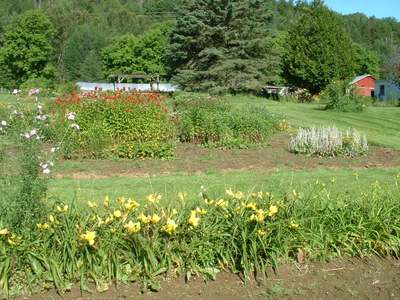
We grow our own perennials to sell, digging and potting them in the fall and the spring.  To this end we have six large gardens.  And we can't maintain them all anymore, so from one of the gardens we are having a DAYLILY DIGATHON sale -  Fill a five gallon bucket for $4.00.

I picked blooms from that digging field on Monday and show them below.


Wednesday, Thursday, Friday and Saturday (Aug 2 - Aug. 5 ) from 9 am - 11:30 am come to Amanda's Greenhouse and we will supply you with a five gallon bucket. Please BRING YOUR OWN shovel. Fill the bucket with as many plants as you wish. We will transfer the plants into a plastic bag. $4 a heaping bucketful.


This will not be easy digging, so bring a good shovel and strong shoes.

Monday, July 7, 2014

Vermont Perennial SALE - $2.50 each

How is it possible that I have gone since March without posting anything?  I see other growers writing just about every day.  I'm simply too busy.  It has slowed down now and I find myself with a surplus of perennials in quart pots.  They have all been overwintered and will bloom this year, but it is next year that they will really show their stuff.

You know the saying about perennials?  "First year they sleep, second year they creep, third year they leap."  They are creeping now, getting ready to leap.   And they are all on sale for $2.50 each!

I have plenty of one of my favorites - sidalcea.  This is often called a miniature hollyhock.  I started them from seed last year and here's a photo from the seed company.


I use them a lot in bouquets.  We also have echinacea 'magnus' (coneflower), delphiniums, perennial sweet peas, Nora Barlow aquilegia (columbine) and loads more.  Here's a photo of our creeping phlox for sale.


And the Jacob's Ladder on sale is particularly robust.  The pretty foliage is some of the first you see in the spring. 


We are open every day EXCEPT for Monday, 9 a.m. - 6 p.m.

Wednesday, May 4, 2011

The Greenhouses are Open!


It is way past time to get new photos up on this blog. The plants in the greenhouses are doing great and if anything, are a bit ahead of schedule. But outside we are 2 - 3 weeks behind when it comes to digging perennials and getting plants potted and laid out.

Last year the ice out at Joe’s Pond was April 5; this year it was April 27, a good indication of the difference between the two seasons.

We officially opened Sunday and the weather was lovely. Next weekend is Mother’s Day and I hope there are a lot of appreciative children out there in a flower-buying mood, as we have lots of blooms ready.


I have a huge soft spot for violas and pansies.


Some of the perennials that we over wintered in pots, like the above columbine, are blooming already.


'Dark Eyes' has always been the most popular fuchsia and it is the hardest for me to size up, but this year the fuchsias are huge and walking down that aisle is like being in a blooming tropical forest.

At the moment some of our perennial gardens are swamp-like and I am hoping those plants will survive until we can get in there with our shovels.

Meanwhile, I am giving an illustrated talk (and plants as door prizes) Tuesday, May 10, at 6:30 in the Cabot Public Library about "new" perennials and annuals for the northern Vermont gardener.

Sunday, July 19, 2009

Hardy Vermont Perennials and My Story

As I get “into” blogging I realize I have said very little about myself. I am a single woman, no doubt considered elderly by many (will be 63-years-old shortly). My parents always loved gardening. It was more of a chore for me as a child, but as I got older I had to have a garden. It got a bit extreme when I married a local farmer and we ended up with 90 acres of small fruits and vegetables.

The farm thrived, the marriage didn’t, and 20 years ago I started “Amanda’s Greenhouse.” I now have four greenhouses and at least half an acre of perennial plantings which we dig and pot up in the early spring for sales. I pride myself on growing the perennials here (zone 4 at best) and only selling plants that I know will overwinter in the colder northeast.

About half my income is from perennial sales and the rest is from bedding plants and cut flowers.

My friends are wonderful and I love living in a small Vermont community. My other passion, besides horticulture, is vintage fashion. I also have four cats and a dog and I am a lousy housekeeper.

And now - to the gardens. Here are three quick and dirty photos I took by the house this morning before I opened for business. I have more gardens further from the house.


I was delighted to see this pretty new daylily, ‘Beautiful Edging’ which I will have enough of to offer next year.


I do have quite a few of the pretty Dublin Elaine to offer at the sale this year.


We have actually had a day without rain and we are closed tomorrow. My "To Do" list is already almost one page long.

Saturday, July 18, 2009

LET THE DAYLILIES BEGIN

I am having a HUGE daylily sale. Every single variety is on sale for $6.00 and if visitors buy ten or more, the plants are $5.00 each. These are all top notch plants with many fans and I have well over 200 varieties from which to choose. Now if we could just have more sun to get them to show their colors. Here are a few samples of what I am offering.

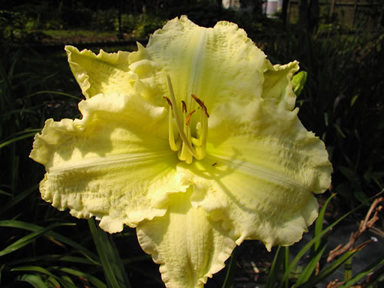
Brocaded Gown is a nice light lemon yellow with lots of ruffling on the petals. It has won the Stout Silver Award, which is the highest award a daylily can receive and only one variety is chosen for this honor each year. This one has is 6 inch blooms.


Chicago Weathermaster is a pretty dark lavender daylily with 6” blooms.


‘Flycatcher’ is what is called a ‘spider’ daylily. It has long narrow flower petals and to officially be labeled a “spider” the petal length to width ratio must be 4 to 1 or greater. This particular flower is 7.5 inches across and a nice strong red with a large yellow to green eye.


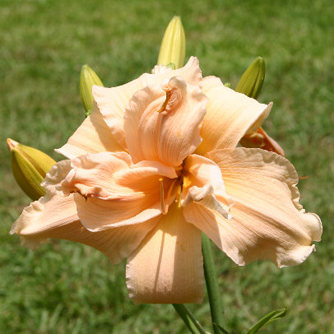
I like the name of this last one - ‘Scatterbrain’ (so apropos) and it is a lovely flower. It is a light peach pink semi double, 6 inches across.


All the daylilies I sell are grown here and are offered in one gallon containers.

Monday, June 30, 2008

Bouquets from Your Garden


I enjoy making bouquets for myself and occasionally am asked to supply arrangements for weddings and large events. Because I have perennials growing in the fields, there’s usually something to choose from, and this article will talk about how to make a long lasting bouquet and my favorite flowers for that purpose.

The best time to cut flowers is in the cool of the morning or in the evening. Morning flowers are turgid and less likely to wilt. For a big job I typically cut flowers in the morning, let them “rest” with preservatives in a cool place during the day, and make the arrangements that evening.

The rule of thumb is to cut newly opened flowers without pollen showing. Once the flower is pollinated it immediately begins the process of fading and forming seed.

Using clean scissors, it’s best to put the stems in warm water which greatly increases water uptake. In the field I cut long stems and strip off the bottom leaves to help prevent decay. Once the bouquet is made I cut the stems one more time.

Floral preservatives definitely prolong the life of a bouquet. They supply food and acidifier. Plants take up acidified water (ph 3.5 - 4.5 ) much faster than nonacid water. If you want to make your own preservative, add 1 teaspoon vinegar, 1 tablespoon sugar and one crushed aspirin tablet to 24 ounces of water. The aspirin helps prevent bacteria and you won’t get that nasty smelling water. Another recipe I have seen is to combine 1 cup regular 7-Up, 1 cup water and 1/2 teaspoon household bleach.

Besides appearance, the most important component of a bouquet is that it be long lasting. Generally flowers that dry well also last a long time in bouquets. Yarrow, gomphrena, astrantia and larkspur would be examples.

As I write these words my Siberian iris are blooming away. I cut them in a bud stage, just as they are starting to open. By the time they are delivered most will be blooming. The buds are pretty as well but this flower is not particularly long lasting . Iris and peonies generally bloom at about the same time and are a nice combination.

One of my favorite “cuts” (below, left) is lysimachia clethroides (gooseneck). It can be an invasive beast and I grow it as a row crop, tilling on each side, but it compliments any bouquet and easily lasts at least a week.


‘Becky’ shasta daisy, which won the perennial plant of the year in 2003, (below, right) is also terrific for cutting. Unlike many other shastas, it stays upright and has a long bloom time and is also long lasting in bouquets.


Another excellent perennial for long bloom and good cuts is ‘Summer Sun’ heliopsis. Monkshood provides blue spikes, which compliment any bouquet. Bee balm comes in shades of red and pink. Astilbe is lovely, but after 4-5 days it wilts for me. I’m not crazy about liatris as a flower, but it certainly is long lasting in bouquets.

I like to use foliage in my bouquets and often use the silver stems of Valerie Finnis artemesia and branches from the burgundy-leaved ninebark.

One of the best cuts in the fall is golden rod. People think this flower is a main cause of seasonal allergies. Golden rod is NOT responsible. The pollen is heavy and sticky, designed for insect pollination, not wind. Its peak blooming period coincides with the peak of ragweed season, which is wind pollinated. The only way to get goldenrod pollen in your nasal passages is to stick the flower up your nose! Wind-blown ragweed pollen is the most common culprit for allergies.

Of course there are all kinds of great annuals for cutting, among them zinnias, asters, snap dragons and the later blooming salvia. I fail at growing zinnias. They get powdery mildew and my asters get aster yellows no matter where I plant them. Celosias are fun for bouquets and later in the season there are all kinds of grasses that look nice.

I am a great fan of lavatera. The blooms look like small hollyhocks and it is easy to grow. There are many sunflowers now available just for cutting. I particularly like Sonja which is 3 1/2 feet tall with tangerine orange blooms. I also like the tall blue ageratums for bouquets.

If you don’t happen to have cut flowers on hand, fresh bouquets are available at most farmers’ markets. Next month I will write about perennials that bloom late in the summer.

For gardening questions you can e-mail me at amanda@amandasgreenhouse.com or call me at 426-3783.